

Aiki-wiki

AIKIDO AND THE MIDDLE PATH by Gene Lamb

We are publishing this article with the kind permission of Susan Perry, Ph.D., Editor-in-Chief of Aikido Today Magazine. Aiki-wiki and Aikido Today Magazine are now collaborating to preserve and digitise old articles.

Susan Perry Sensei’s personal website: https://susanperry.info/

All issues of Aikido Today Magazine can be purchased here: https://budovideos.com/products/aikido-today-magazine-e-book

Edit Template

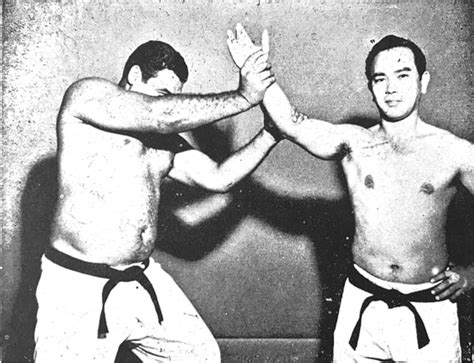
Source of the opening photo: Aikido Community

by Gene Lamb — Aikido Today, July 1987, Vol. 1, No. 2

Gene Lamb brings his background in yoga, meditation, music, and Reichean therapy to his 12 years of Aikido practise. He is presently teaching at Seidokan Aikido Headquarters in Silverlake and at UC Irvine.

There is an exercise that most of us in Aikido have learned, usually called the unbendable arm. In this exercise we hold out our arm while someone attempts to bend it. We find if we tense our muscles that we can stand a certain amount of force and then the arm collapses. Naturally if we are limp the arm is easily bent. Our instructors help us to find that there is a place in between these opposites where we are relaxed but not limp. Our arm is extended but not tense. We find at this point that we can stand much more pressure than if our arm were tense and that it doesn’t collapse. We train to attain this same “extension” throughout our bodies, this “middle-path” between tension and limpness. We find that this middle-path is not a fixed state but that it requires constant adjustment to our surroundings, yet at the same time it is a very relaxed, natural state.

These three states, tension, limpness, and extension, can be looked at as different ways of moving energy in our bodies. Tension is moving energy from the center to the periphery where it builds up. Limpness is withdrawing energy from the periphery to the center where it again collects. Extension is a continual free flow of energy. Tension and limpness are both static states, the energy is blocked from its free flow. Extension is the absence of blockages to the free flow of energy, it is a balance between these two fixed extremes, a middle-path. We attain this balanced state not by holding on to something but by letting go. By relaxing we let go of blockages to our own free flowing being, constantly adjusting to what is around us and in us.

In our Aikido practice with others we find these same three states. Resisting or fighting back parallels tension. It is opposing our attacker’s energy with our own. Obviously the stronger will win. Giving up correlates to limpness. This is withdrawing energy allowing the attacker to do whatever they want to us. The middle-path we call harmony. Harmony is not a state in itself but a balance point, a middle-path between the opposites of fighting and of giving in. The free flow of energy is not a stable place where we can say “now I’m in harmony”, but a constant adjustment to our surroundings. We find that we can stand our ground without fighting. That we can yield without giving up. Harmony requires that we constantly adjust to the changes in our experience but in a relaxed, natural manner.

When walking a tightrope, if we start to lose our balance one way we lean the other to compensate. There is no center of a tightrope that we must walk on but a sensitivity to our own balance and practice at adjusting. Masters at walking the tightrope still have to adjust; they’re just much better at it than the rest of us. They sense much sooner and more accurately when they are off center, when we are fighting or withdrawing, and adjusting accordingly.

The present is a middle-path in time. A point between our memory of where we came from and our expectations for the future. A balance point between what we have been and what we could be. We create tension by forcing ourselves or our situation to match our expectations or imagination. We withdraw by nostalgia over how it once was or we once were, or by fantasizing how we would like to be. The present is constantly changing. It is free flowing energy. It is a point of constant change. The middle-path, the path of the present, requires constant awareness and adjustment. It is never what we imagined. Yet it is only in the present that we can do anything. The past is gone, the future not yet here. These are simply thoughts in our minds. Our balance point is to be present in the moment. When we topple back into the past or forward into the future we must bring ourselves back to the present, back to balance.

You can find this entire article and much more in Aikido Today Magazine.


Aikido Today Magazine

Aikido Today Magazine was a forum where Aikido students and teachers wrote in their thoughts. Many were the controversies about the nature of Aikido and how it should be practiced. Many articles from the beginner point of view as well as articles and interviews with seasoned teachers. ATM enjoyed correspondents from all over the world. Don’t miss out on this great material.

You can find this entire article and much more at: https://budovideos.com/products/aikido-today-magazine-e-book
More from the author of Aikido Today Magazine

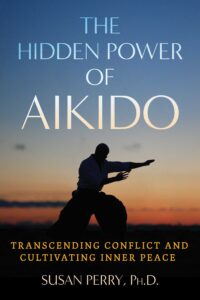
Illuminating the inner philosophical and practical aspects of Aikido, forty-seven-year Aikido practitioner and 6th-degree blackbelt Susan Perry, Ph.D., uses personal stories of joy, achievement, and hardship to demonstrate real-life applications of the transformational principles of Aikido. She introduces what Aikido is and where it comes from, providing a brief biography of its founder, Morihei Ueshiba. She explains in detail how Aikido helped her resolve difficulties at work, as a student, and as a teacher/sensei. Through each story shared, the author offers a glimpse of the beginner’s mind in action, the key to changing even the violent energy of an attack into peaceful interaction.

Presenting Aikido’s step-by-step protocol for developing the receptiveness of the beginner’s mind, a state essential to personal transformation, Perry explains how distraction and timing can be used to deescalate potentially violent or dangerous situations. She discusses the founder’s philosophy of conflict, showing how Aikido can help peacefully resolve difficulties that arise with pushy, intimidating, and unpredictable people, those who are stubborn or don’t listen, insincere people who want something from you, and chaotic situations. She explains how a deepening practice of the martial art leads to an aiki state of inner peace, fusion, and boundless joy.

Revealing how Aikido can help you face your fears and develop your heart and soul, this book shows how this martial art helps you embrace change, cultivate a strong center, and ultimately live a joyful life of engagement with the world.

You can buy the book here: https://www.amazon.com/Hidden-Power-Aikido-Transcending-Cultivating/dp/1644118971

Budo Videos

Budo Videos is a very extensive online shop specialising in budo. It features a wealth of fantastic content, and you’ll find plenty of material from Susan Peryy, editor-in-chief of Aikido Today Magazine.

If you’re interested in Japanese budo, Budo Videos is one of the best shops specialising in this subject. There’s also plenty of material here for Aikido practitioners that you’d struggle to find elsewhere.

Link: https://budovideos.com/

Edit Template

Napsat komentář

Vaše e-mailová adresa nebude zveřejněna. Vyžadované informace jsou označeny *


The reCAPTCHA verification period has expired. Please reload the page.